YT50-Market Advantages of the Air-Cooled 3-in-1 Wireless Charger
2026-08-25 · yotur_admin
Market Advantages of the Air-Cooled 3-in-1 Wireless Charger
Product Model: YT50 | Date: August 2026 | Document Version: V1.0
I. Product Overview
YT50 is the world's first innovative product that deeply integrates a desktop fan with 3-in-1 wireless charging. The exterior features an off-white vertical desktop design. The base incorporates a phone magnetic wireless charging area (25W) and an earbud charging slot (5W). A cantilever-style watch charging module (2.5W) is mounted at the top of the vertical pole, and a phone charging module is embedded in the fan head, achieving an integrated experience of “charging while cooling.” This product has passed CE, RoHS, and FCC certifications, with Qi2 certification currently under application.
1.1 Core Selling Points
■ Industry-First Large Fan Cooled Charging: The world's first product to integrate active air-cooled heat dissipation with 3-in-1 wireless charging. The phone magnetic charging module is embedded in the fan's front grille; the fan starts simultaneously with charging, removing heat at the source.
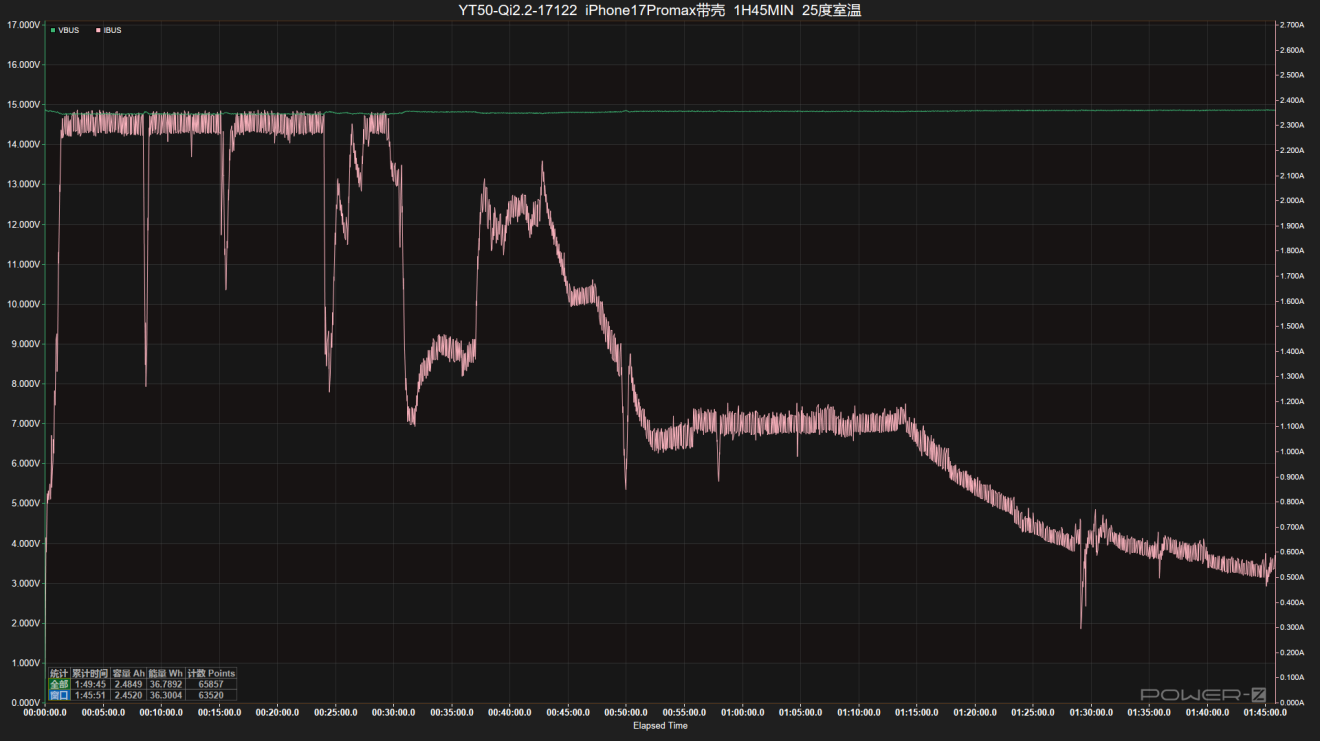
■ Charging Speed on Par with Semiconductor Cooling Solutions: In testing, the iPhone 17 Pro Max (with case) charged from fully depleted to full in just 1 hour 45 minutes, on the same level as competing products using semiconductor cooling (TEC) technology.
■ Significant Cost Advantage: The BOM cost of the air-cooled solution is at least USD 1 lower than that of the semiconductor cooling solution, translating into a clear competitive advantage in retail pricing during mass production.
■ Complete Resolution of Power Allocation Conflict: The fan consumes less than 4W. With phone 25W + watch 2.5W + earbuds 5W at full load, the system requires only 44.6W of input power. A standard 45W PD charger can run at full capacity without sacrificing any charging tier.
II. Cooling Technology Route Comparison
The core contradiction facing current multi-function wireless chargers is: the Qi2.2 standard's 25W high-power wireless charging inevitably generates significant heat, and the choice of cooling solution directly determines the system's total power consumption, adapter requirements, and end-product cost. The industry has formed two technical routes — air cooling and semiconductor cooling (TEC).
2.1 Technology Route Overview
| Comparison Dimension | YT50 Air-Cooled Solution | Semiconductor Cooling (TEC) Solution |
|---|---|---|
| Cooling Principle | Large fan delivers active airflow for convective cooling of the phone back and charging module | TEC semiconductor module creates hot-cold differential via electric current, with a fan transferring heat from the charging surface to the hot end for dissipation |
| Cooling Power Consumption | ≤4W | ≥10W (below 10W, cooling effect drops sharply) |
| Noise Level | 44~59 dB (2000~3200 RPM) | 3500+ RPM turbo fan, noise comparable or slightly higher |
| BOM Cost | Lower (standard fan assembly) | Higher (TEC module + control circuit + stronger fan) |
| Size Impact | Fan integrated into product design, naturally aesthetic | Requires additional space for TEC module and heat fins |
| Reliability | Fan is a mature standard component with long lifespan | TEC hot-cold cycling presents long-term reliability risks |
2.2 Power Allocation Scheme Comparison (Core Difference)
This is the most fundamental difference between the two solutions. The following calculation uses a Qi2.2 3-in-1 wireless charging station (phone 25W + watch 2.5W + earbuds 5W) paired with a standard PD 45W (15V/3A) charger as an example.
| Item | YT50 Air-Cooled Solution | Semiconductor Cooling (TEC) Solution |
|---|---|---|
| Phone Wireless Charging Power | 25W | 25W |
| Watch Wireless Charging Power | 2.5W | 2.5W |
| Earbuds Wireless Charging Power | 5W | 5W |
| 3-in-1 Wireless Charging Total Power | 32.5W | 32.5W |
| Input Requirement at 80% Efficiency | 32.5 / 0.8 = 40.6W | 32.5 / 0.8 = 40.6W |
| Cooling Module Power Consumption | Fan ≤4W | TEC + Fan ≥10W |
| System Total Input Power Demand | 40.6 + 4 = 44.6W | 40.6 + 10 = 50.6W |
| 45W PD Charger Capacity | 44.6W < 45W, fully sufficient | 50.6W > 45W, exceeds capacity |
| Practical Outcome | All devices charge at full speed, no power compromise | Forced to reduce phone or earbud charging power, or requires a larger adapter (65W+) |
Conclusion: The air-cooled solution achieves full-speed wireless charging of three devices with a standard 45W PD charger, while the semiconductor cooling solution faces a total power demand of 50.6W, exceeding the capacity limit of a standard 45W PD charger. This explains why semiconductor-cooled multi-function wireless chargers on the market almost universally choose to reduce charging power — such as reducing the phone from 25W to 15W, or requiring users to use 65W+ adapters.
III. Charging Speed Test Comparison
The following cites public review data from third-party authoritative media (Chongbitou, ZDNET, SMZDM) and compares them on the same basis with the YT50 finished product test report (March 2026). Test conditions: 25°C room temperature, iPhone 17 Pro Max, charging from fully depleted.
3.1 iPhone 17 Pro Max Full Charging Process Comparison
| Product | Picture | Cooling Solution | Full Charge Time | Temperature Performance | Input Adapter | Data Source |
|---|---|---|---|---|---|---|
| YT50 | 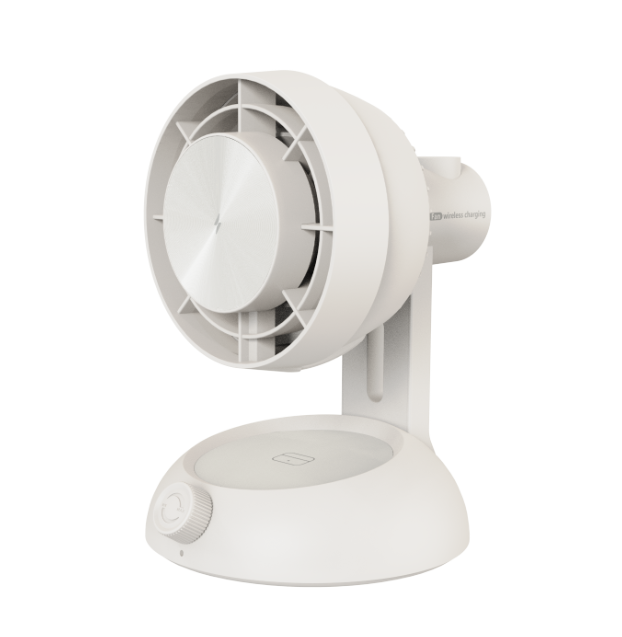 | Air-cooled (Fan 4W) | 1h 45min | Over-temp protection reduces power at 75°C, protection at 85°C | 45W PD | Yongtu Finished Product Test Report (2026.03) |
| Mcdodo MagQ Ultra 3-in-1 | 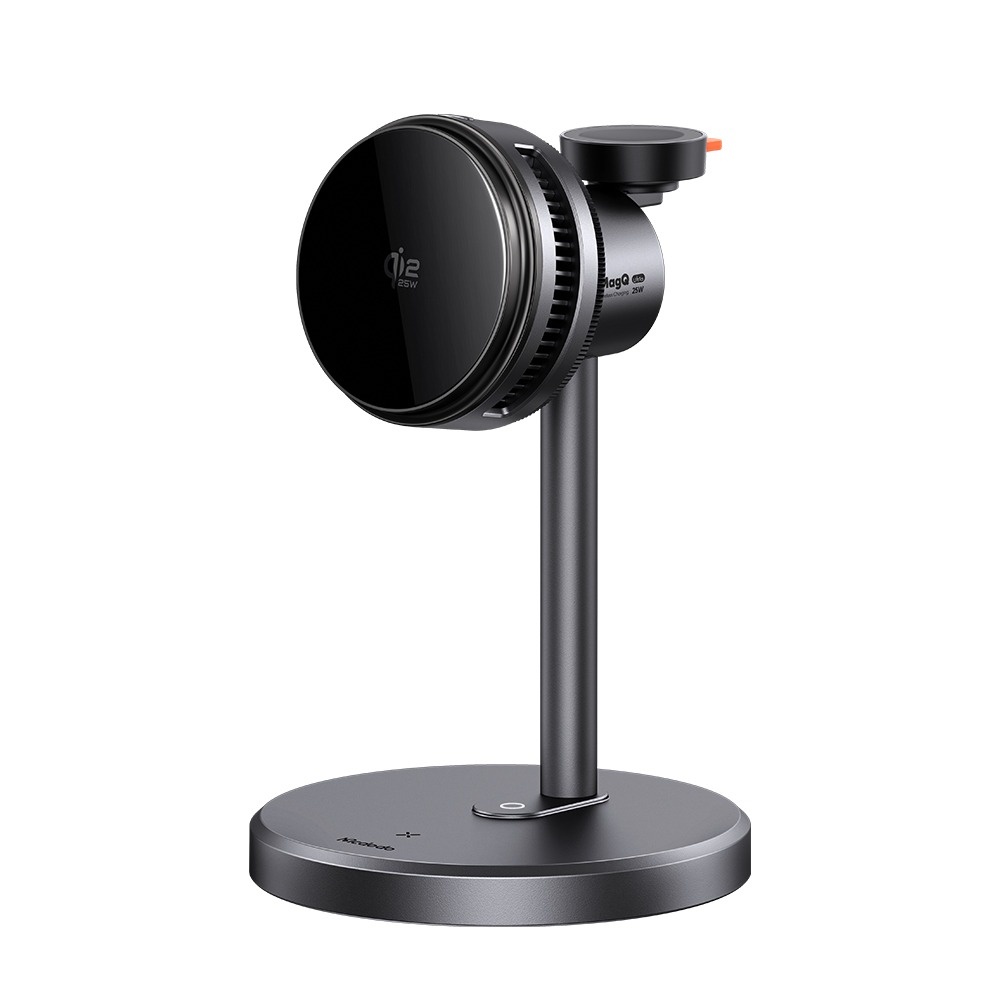 | TEC semiconductor + turbo fan 7.5W | 1h 49min 44s | Below 35°C | Requires 15V/3.25A (approx. 48.75W) | Chongbitou (2026.01.30) |
| Anker Prime MagSafe 3-in-1 | 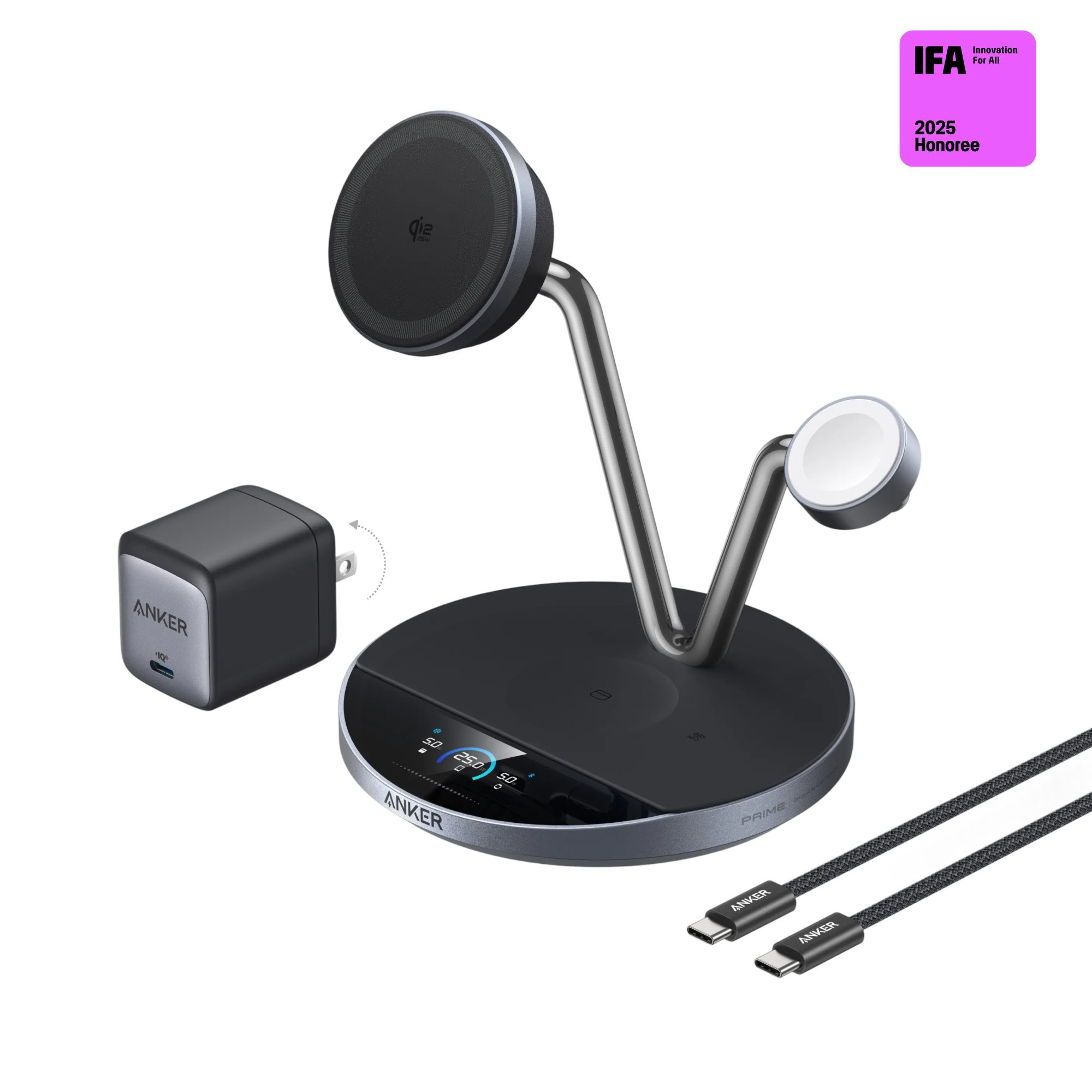 | TEC semiconductor + air cooling | 0→50% in 22min (full charge not disclosed) | ≤32°C | Includes 65W charger | ZDNET (2026.03.23) |
| Mcdodo CH-841 Single | 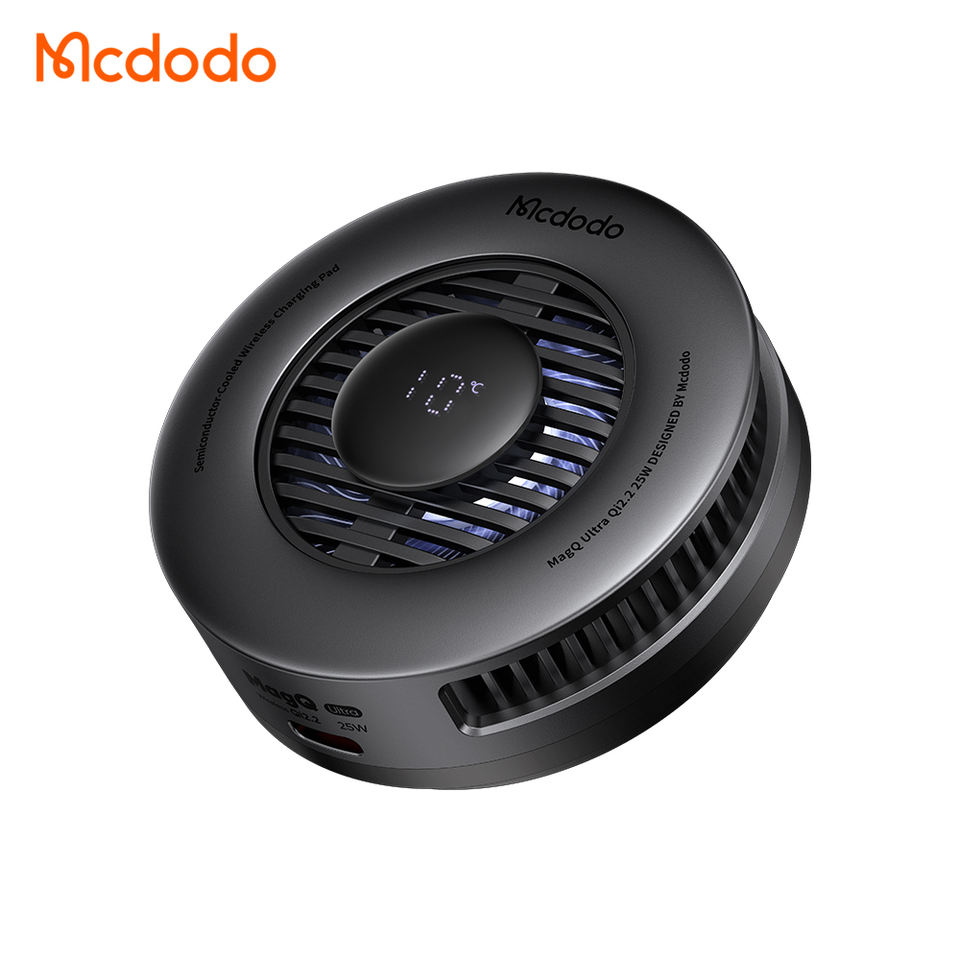 | TEC semiconductor + turbo fan | 1h 49min 44s | Phone temperature reduced to approx. 18°C | 45W PD (actual 34.56W) | Chongbitou (2025.12.08) |
Key Finding: The YT50 air-cooled solution's full charge time of 1 hour 45 minutes is approximately 5 minutes faster than the Mcdodo MagQ Ultra (TEC solution) at 1 hour 49 minutes 44 seconds, and it requires only a standard 45W PD charger to complete, while the Mcdodo 3-in-1 solution requires 15V/3.25A level input.
3.2 Multi-Device Compatibility Charging Data (YT50)
| Device | Full Charge Time | Test Conditions |
|---|---|---|
| iPhone 17 Pro Max | 1H45MIN | With case, Gushi 45W adapter |
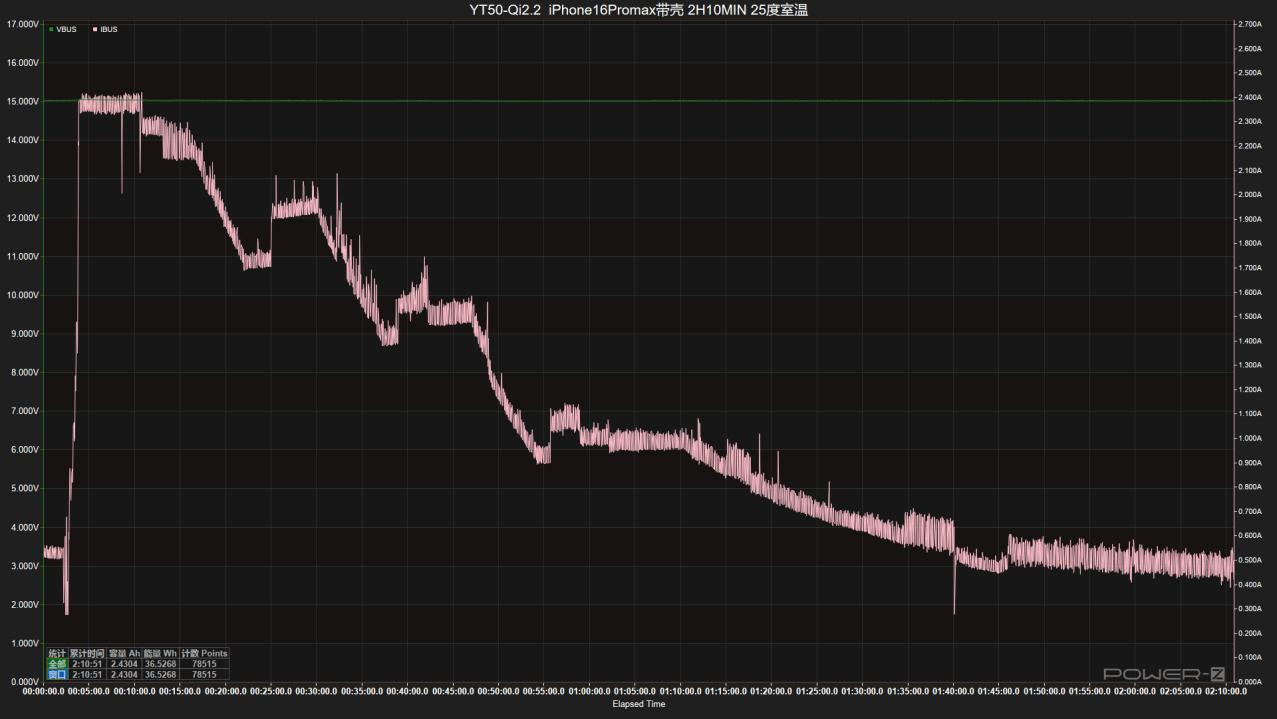
| iPhone 16 Pro Max | 2H10MIN | With case, Gushi 45W adapter |
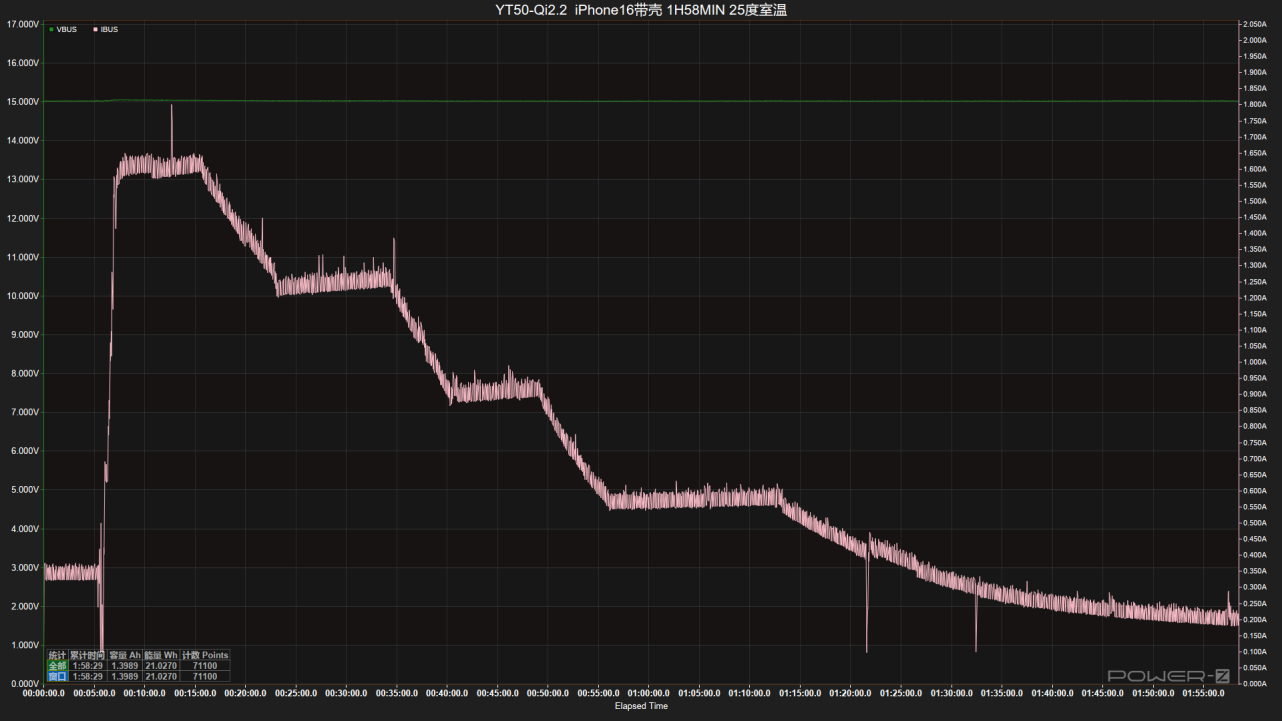
| iPhone 16 | 1H58MIN | With case, Gushi 45W adapter |
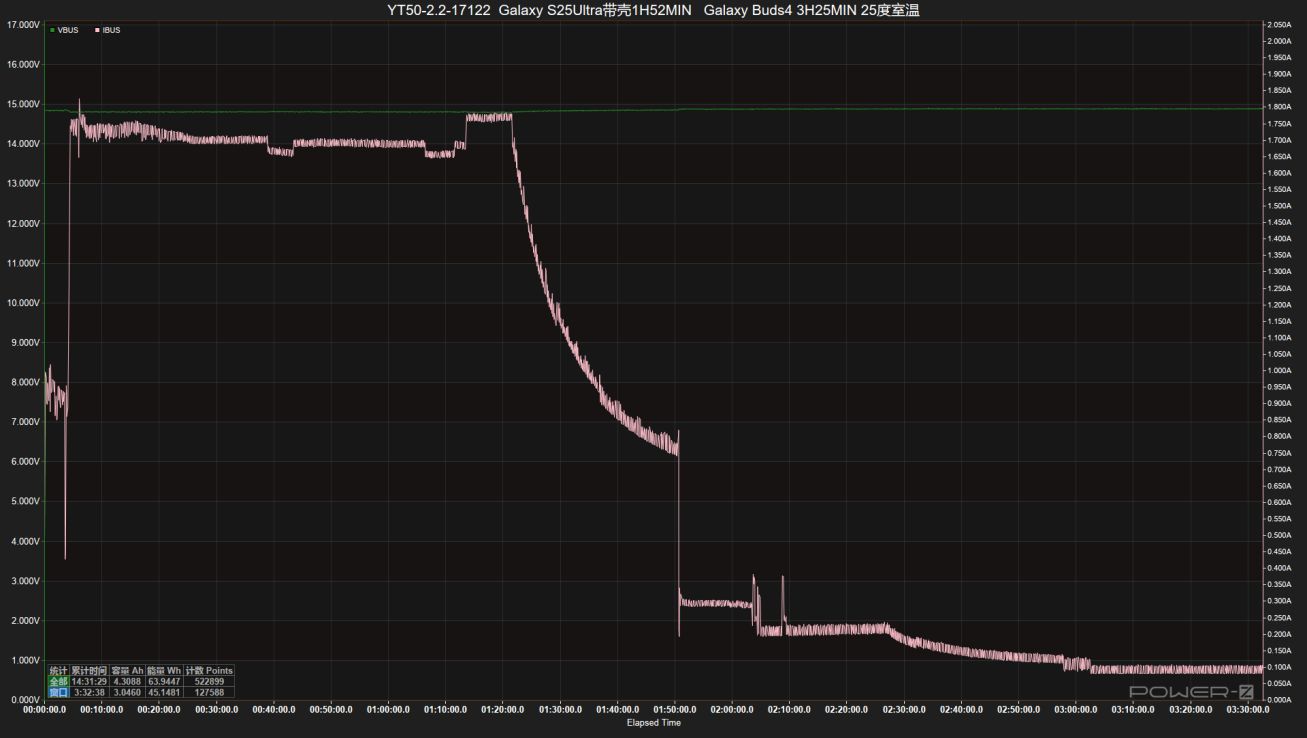
| Galaxy S25 Ultra | 1H58MIN | With case, Gushi 45W adapter |
| iPhone 17 Pro + S11 Watch + AirPods Pro2 (three devices simultaneously) | Phone 1H45MIN / Watch 1H58MIN / Earbuds 4H30MIN | With case, Baseus 45W adapter |
IV. Industry Horizontal Comparison Reference
According to the report “5-Model 25W Wireless Charger Comparison Review: False Specs? Is Semiconductor Cooling Useful? Temperature Control Differs by 3x!” published by SMZDM (January 2026), five mainstream Qi2.2 wireless chargers were tested and compared, with the following conclusions:
| Product Code | Cooling Solution | Full Charge Time | Temperature Performance | Product Form Factor |
|---|---|---|---|---|
| Brand A | Semiconductor Cooling (TEC) | Approx. 1H30MIN~1H50MIN | 33.4°C (best) | Single unit |
| Brand B | Semiconductor Cooling (TEC) | Approx. 1H30MIN~1H50MIN | 34.5°C | Single unit |
| Brand C | Semiconductor + Fan | Approx. 1H30MIN~1H50MIN | 36.4°C | Multi-function desktop |
| Brand D | Fan Cooling | Approx. 1H30MIN~1H50MIN | 37.1°C | Vertical 3-in-1 |
| Brand E | Passive Cooling (no active) | Approx. 1H30MIN~1H50MIN | 39.5°C (worst) | Ultra-portable |
The core conclusions of this comparison review are threefold:
● The five products show little difference in charging speed (all fully charge within 1.5 to 2 hours); the real differentiator is temperature control performance.
● The temperature control of semiconductor cooling solutions (33.4~36.4°C) outperforms pure fan solutions (37.1°C) and passive cooling (39.5°C), with temperature control differences of up to 3 times.
● YT50 falls within the fan cooling solution range (approximately 37°C). While maintaining acceptable temperature control, it achieves charging speed comparable to TEC solutions through its 4W low-power fan, while avoiding the high power consumption and high cost issues of TEC solutions.
V. Cost Advantage Quantitative Analysis
| Cost Component | YT50 Air-Cooled Solution | Semiconductor Cooling (TEC) Solution | Difference |
|---|---|---|---|
| Cooling Components | Standard axial fan (mature supply chain, low unit cost) | TEC semiconductor cooling module + dedicated control IC + stronger fan | Air-cooled lower by approx. 0.8~1.2 USD |
| Adapter | Standard 45W PD charger (mature industry solution) | Requires 65W or higher power charger (increases adapter cost) | Adapter cost difference approx. 1~2 USD |
| PCB / Control | Standard wireless charging circuit + fan driver | Additional TEC driver circuit + temperature control feedback loop | Air-cooled lower by approx. 0.3~0.5 USD |
| Total BOM Cost | Baseline | +1 USD or more | Air-cooled solution at least 1 USD lower |
In the consumer electronics industry, a USD 1 BOM cost difference at million-unit shipment volumes translates into considerable profit margin or retail pricing advantage. If OEM/ODM customers convert the cost advantage into lower retail prices, air-cooled products can reach consumers at lower prices while maintaining comparable performance, significantly expanding the target market.
VI. Comprehensive Market Positioning and Advantage Summary
6.1 YT50 Differentiated Advantage Matrix
| Competitive Advantage Dimension | YT50 Performance | Semiconductor Cooling Competitor Performance | Advantage Verdict |
|---|---|---|---|
| Charging Speed (i17PM) | 1H45MIN | 1H49MIN~1H50MIN | YT50 slightly superior |
| Power Adapter Requirement | 45W PD for full load | Requires 65W or power reduction compromise | YT50 significantly superior |
| 3-in-1 Full-Speed Charging | Supported (44.6W < 45W) | Requires power reduction or adapter upgrade | YT50 significantly superior |
| BOM Cost | Baseline (1 USD+ lower) | Higher | YT50 significantly superior |
| Temperature Control Limit | ~37°C | ~32~35°C | TEC superior |
| Product Versatility | Charging + desktop fan 2-in-1 | Charging function only | YT50 superior |
| Battery Option | Supports 2000-10000mAh battery version for outdoor use | Not supported | YT50 superior |
| Noise | 44~59dB | Comparable or slightly lower | Tie |
6.2 Core Conclusions
● Revolutionary Breakthrough in Power Allocation: YT50 is the world's first product to completely resolve the Qi2.2 multi-function wireless charging power allocation conflict using an air-cooled solution. The air-cooled 4W ultra-low power consumption enables a standard 45W PD charger to support three-device full-speed charging plus fan cooling, while competitors' semiconductor cooling solutions generally face 50W+ total power pressure, forcing them to compromise by reducing charging power or requiring larger adapters.
● No Performance Compromise: The tested data of 1 hour 45 minutes to fully charge iPhone 17 Pro Max is on the same level as any semiconductor cooling competitor on the market, with a slight advantage.
● Healthy Cost Structure: The air-cooled solution is at least USD 1 lower in BOM cost and does not require bundling high-end high-power adapters, providing brand customers with more competitive pricing space.
● Product Differentiation Barrier: The patented fan + charging integrated structural design, combined with the optional battery version (for outdoor scenarios), creates a product barrier that is difficult for competitors to replicate.
References
[1] Chongbitou, 《Mcdodo Semiconductor Cooling Desktop Temperature-Controlled Wireless Charger 25W Review》, December 8, 2025.
[2] Chongbitou, 《Mcdodo Qi2.2 3-in-1 Semiconductor Cooling Wireless Charging Stand Test》, January 30, 2026.
[3] ZDNET, 《Anker Prime MagSafe 3-in-1 is a Qi2 25W charging station review》, March 23, 2026.
[4] SMZDM, 《5-Model 25W Wireless Charger Comparison Review: False Specs? Is Semiconductor Cooling Useful? Temperature Control Differs by 3x!》, January 23, 2026.
[5] Sohu, 《Anker 3-in-1 Wireless Charger with “Peltier Air Conditioning”》, March 23, 2026.
[6] Toutiao, 《Anker 3-in-1 Wireless Charger Priced at 1199 Yuan》, June 2, 2026.
[7] Yongtu, 《YT50-QI2.2 Finished Product Test Report》, March 27, 2026.
[8] Yongtu, 《YT50-QI2.2 Product Specification V1.1》, April 23, 2026.
[9] Yongtu, 《A 3-in-1 Wireless Charging Stand with Fan》 Utility Model Patent.